
Illustrative case study · Simulated fleet
One boat needs a repair. Another needs a service plan.
Pelican is waiting for a repair. Halcyon is approaching its next service interval. The same maintenance screen needs to support two different decisions.
Harborline Charters is fictional. This walkthrough uses the actual PATHR dashboard with simulated boats, readings and outcomes. No customer results are claimed.
By the Pathr Fleet team · · 4 min read
- Operation
- Harborline Charters · Fictional operator
- Vessel
- Pelican & Halcyon · Charter cruisers
- Focus
- Maintenance handover
The situation
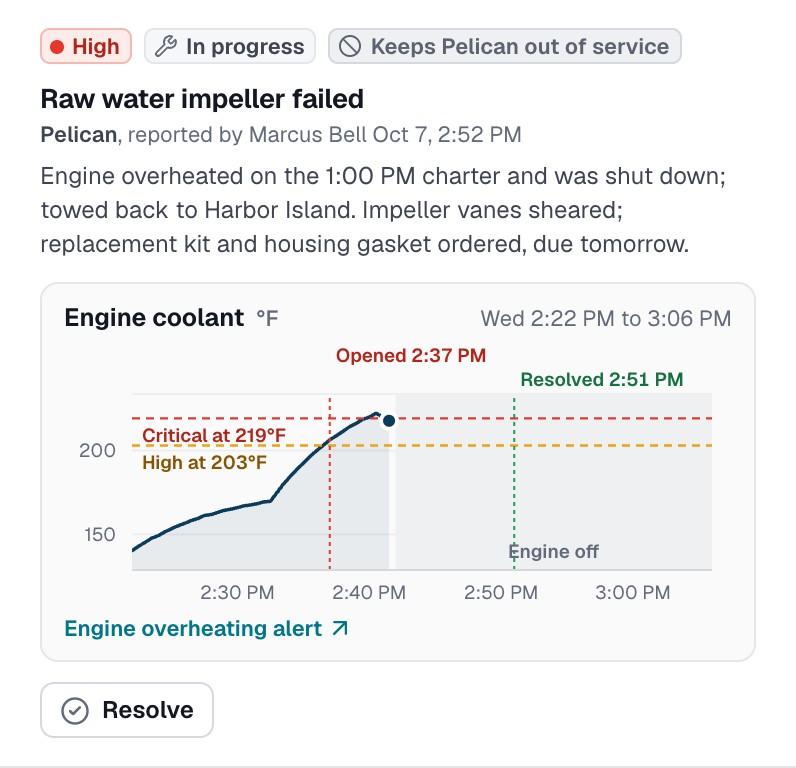
In the public demo, fictional Harborline Charters operates a mixed fleet on San Diego Bay. Pelican, a 28 ft cruiser, is at its berth and out of service. The simulated maintenance record describes a failed raw-water impeller, an inspection already performed and replacement parts still pending.
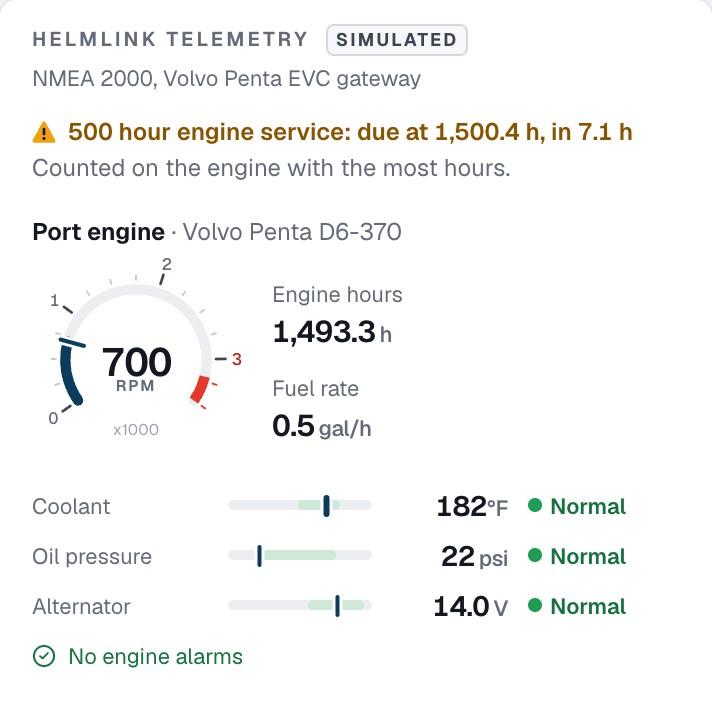
Halcyon, a twin-engine 40 ft cruiser, is on its afternoon charter. Its configured 500-hour engine service is due in roughly seven more engine hours in the demo’s afternoon scene. A due-soon task and an unresolved propulsion defect appear together, but they do not justify the same operational response. All records and readings here are fictional.
The decision
How does the dock team keep an unresolved defect separate from routine service that is approaching its due point?
Work through the decision
Read the issue before changing availability
For Pelican, open the issue and distinguish the original report, the technician’s recorded assessment and the work that remains. The existing inspection note does not say the impeller has been replaced. An expected parts date describes a plan, not completion or authorization to sail.
Keep the boat unavailable while the blocking issue remains unresolved. In the demo, an out-of-service vessel cannot start a new booking or route. Acknowledging an associated alert does not remove that restriction, and a separate manual hold may still apply after an individual issue is resolved.
Plan service from the correct hour record
For Halcyon, inspect the task’s last completed service, interval and current engine readings. Its example interval is 500 engine hours, not a claim that its engine meter reads 500. The afternoon demo shows a meter around 1,493 hours and a task due around 1,500 hours. The configured schedule also has a calendar limit.
Review both engines and the boat’s upcoming commitments before reserving downtime. A due-soon notice prompts planning; it does not diagnose a failure. Use the vessel’s actual manufacturer schedule and operating policy in a pilot rather than treating this fictional task as a universal maintenance recommendation.
Make the handover and release conditions explicit
Give each open item an owner, next action and update time. Keep the schedule impact visible to the people assigning boats. Planning a future workshop window reserves availability during that window; it cannot repair Pelican or make an unresolved concern disappear today.
Record completed work only after it has happened, with its date, relevant meter reading and technician’s account. Review remaining issues, inspection requirements and any manual hold before the authorized release decision. The separate guided practice supplies a fictional technician report when it teaches recording a completed repair; it never asks visitors to claim an unperformed repair.
What this example demonstrates
On the unchanged demo, Pelican stays out of service while its issue remains open. Halcyon’s task remains a service-planning item whose remaining allowance changes as engine hours accumulate. The dashboard exposes that distinction without turning a due-soon notice into a breakdown or an inspection record into a completed repair.
This example demonstrates recordkeeping and scheduling behavior: an unresolved repair stays visible while a different boat’s next service is planned. Survive Saturday uses different scenario readings and constraints, so its maintenance decision must be assessed separately.
What to measure in a real pilot
Use this example to frame an evaluation with your team. A real pilot needs your boats, equipment, connectivity and operating procedure before any operational benefit can be measured.
- Compare uploaded engine-hour readings with each engine’s own meter and document missing channels or reporting gaps.
- Check whether every blocking defect has a current availability state, owner and documented release conditions.
- Record service completion and unplanned downtime with consistent causes and dates before evaluating a change over time.
Read the current product and hardware status before planning a rollout.
Want to evaluate this workflow with your fleet?