For boat rental operators
Boat rental fleet management, from handoff to return.
Bring boat GPS tracking, due-back times, geofence alerts, maintenance and return inspections into one rental operation. Explore the actual PATHR dashboard with a simulated fleet, then review the hardware and connectivity needed for your boats. Booking-system integrations and live inspection processing are planned.
The demo runs a simulated fleet in your browser. No account needed.

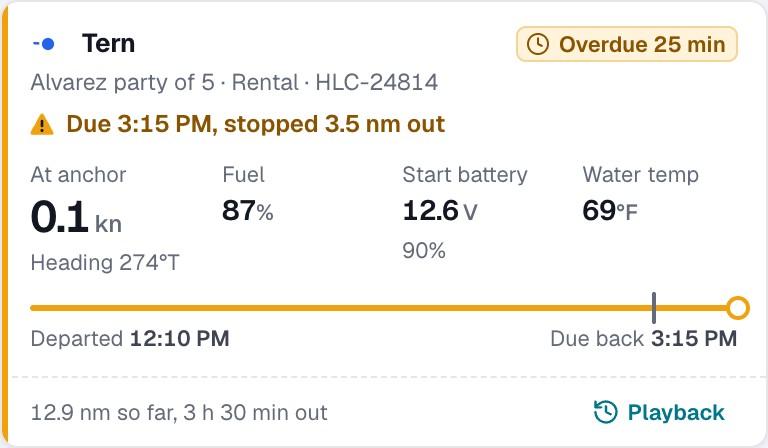
Overdue rentals, flagged on time
Each rental has a due-back time. If the boat is still outside your return zone after it, Pathr Fleet marks it overdue on the trips board, on the chart and in alerts, with how late it is and how far out. Your team can review the latest reported position, its age and the rental record before choosing a follow-up.
You choose the grace period (10 minutes by default). The critical threshold is 60 minutes after the scheduled return by default. Entering the return zone clears the overdue alert; it does not complete the inspection or confirm the boat is ready.
- Minutes overdue, distance and latest report age
- Escalation you can set per fleet
- Every alert records who acknowledged it and when
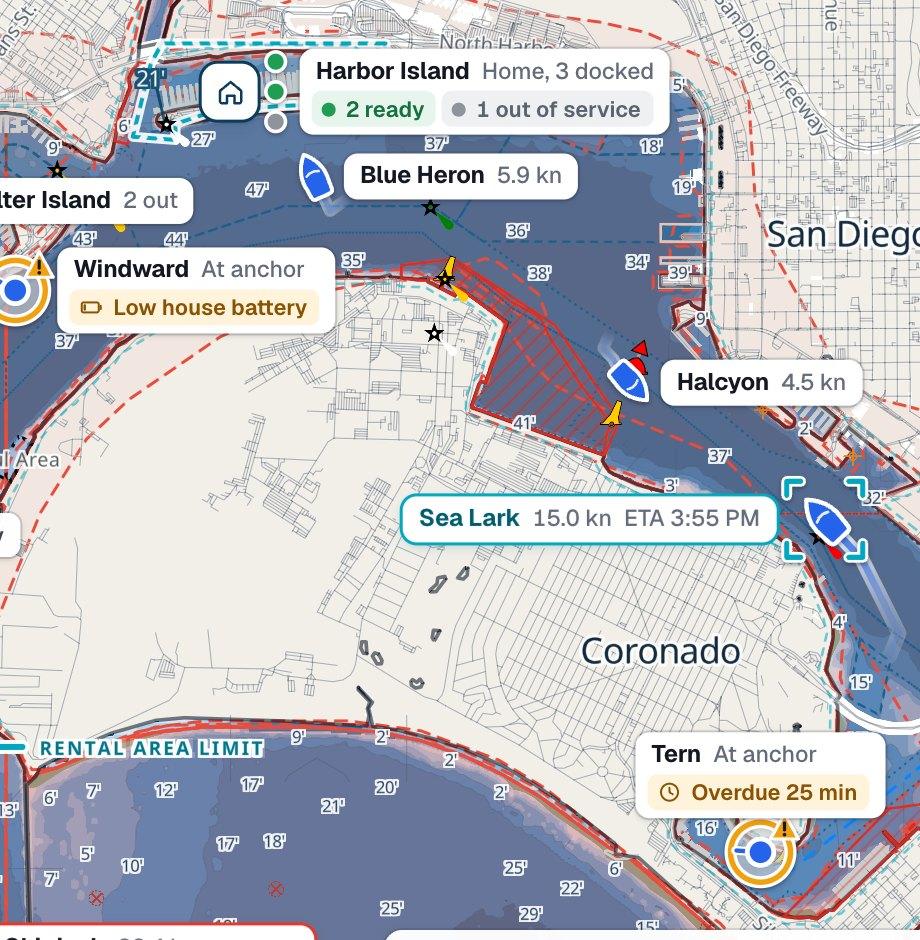
Boat GPS tracking with rental-area alerts
Draw your rental area on the chart. When a boat crosses the line you get a warning with how far outside it is; past 500 meters it becomes critical. A 30 meter band absorbs GPS jitter, so a boat running along the line does not set off a stream of alerts.
Charted no-entry zones, such as naval security areas from NOAA charts, raise a critical alert the moment a rental enters one.
The record of every rental
Every trip keeps its track on the Pathr chart with speed, engine and fuel along the way, and every alert it raised. When a customer disputes a fuel charge, a late fee or what happened near the rocks, you can replay the trip instead of arguing about it.
- Track colored by speed, with playback
- Engine hours, fuel used and alerts for the trip
- Kept for every boat, every day

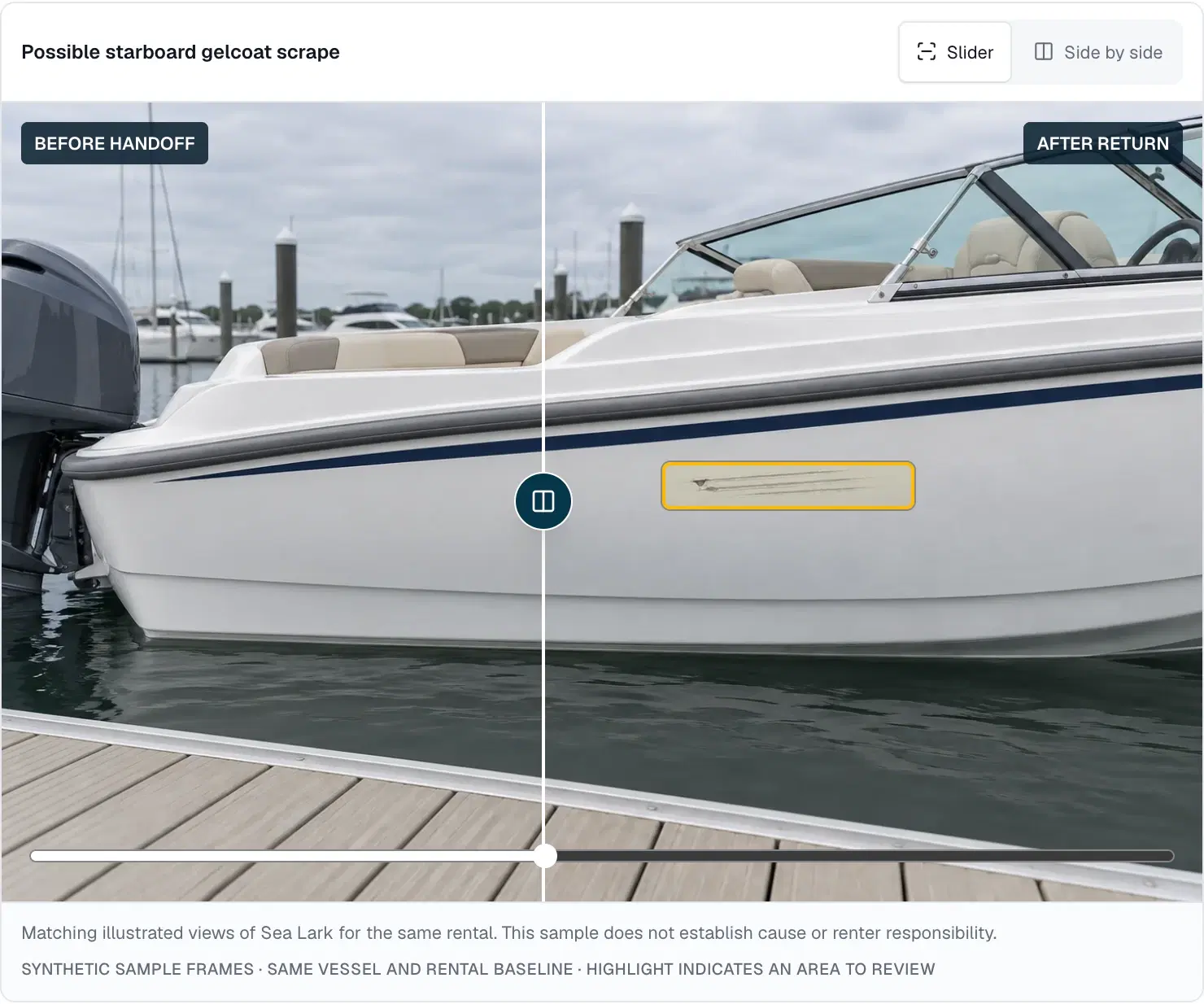
Keep the before and after record with the rental
Explore the inspection pilot preview: saved before and return videos or photos stay with the same boat and rental. Review possible changes, request missing coverage and keep staff decisions in the vessel history.
The public sample uses synthetic evidence and saved analysis. Personal uploads and live AI damage detection are planned for pilot development. Confirming a finding does not assign renter fault or authorize a charge.
Ready for the next customer
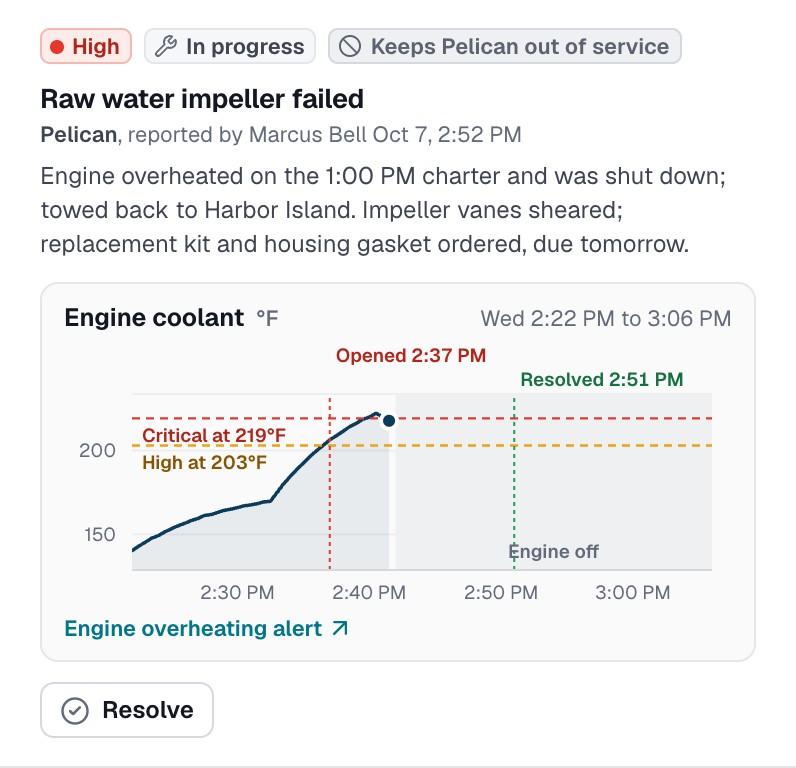
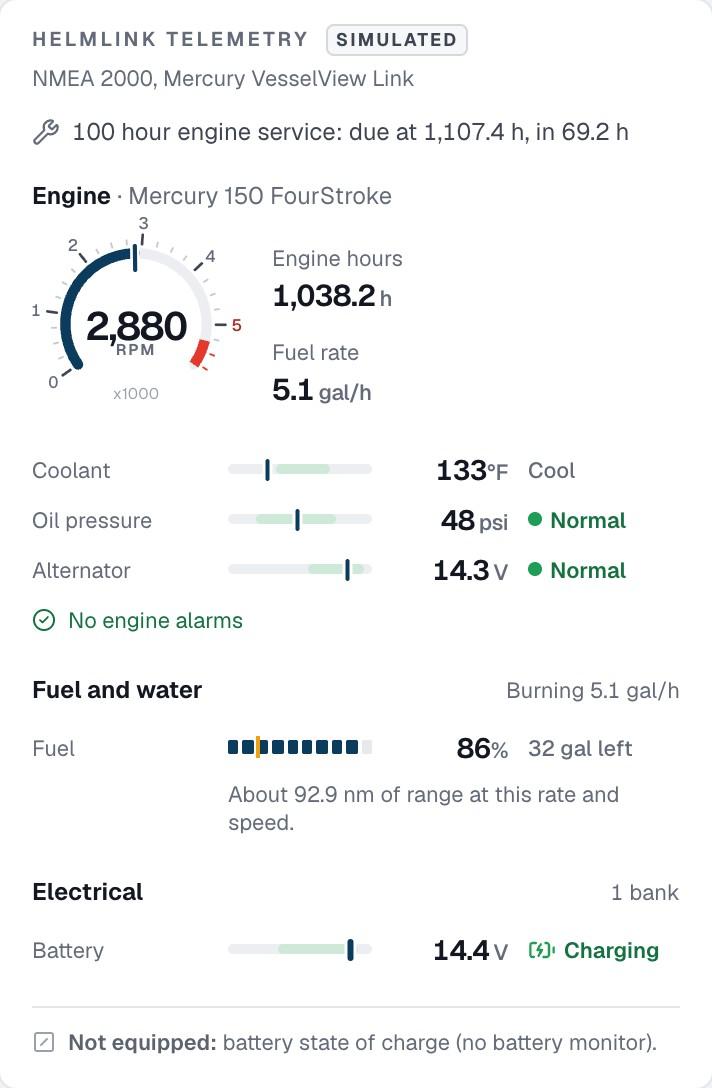
Before a boat goes back out, Pathr Fleet shows its fuel, battery voltage and charging, engine hours against the next service, and any open issue. A reading outside its normal band raises an alert with the trace behind it.
Staff decide which issues need an out-of-service hold. In the demo, a hold blocks new bookings; a non-grounding cosmetic issue can stay open without taking the boat off the schedule.
Engine hours without a logbook
When compatible equipment supplies engine hours, HelmLink brings them into the vessel record so hour-based services can be evaluated alongside calendar dates. Missing or unavailable readings stay visible; the software does not infer hours a boat has not reported.
Plan the workflow
Practical guides for your dock team.
Use these procedures and checklists to discuss how the dashboard fits your operation. Then try a guided task with a simulated fleet.
- TrackingHow to track rental boats: trackers, phones and fleet platforms comparedGPS trackers, a phone left aboard, or a platform on the boat's own network: what each tells a rental operator, and how to choose.Read the guide
- OperationsWhen a rental boat is overdue: a step-by-step procedure for the dockAn overdue boat rental procedure with position-age checks, contact and escalation steps, a reusable shift handover template and guided dashboard practice.Read the guide
- SafetyGeofencing a boat rental area: how to draw boundaries that workDraw a rental area on the chart, add a buffer so GPS jitter does not cause false alerts, mark no-entry zones, and decide what happens at the line.Read the guide
Learn the controls with guided practice.
Practice has no timer and walks you through the actual dashboard. Survive Saturday is a separate 90-second challenge when you are ready to put your decisions to the test.
Questions operators ask
- Do we have to replace our booking software?
- No. Pathr Fleet tracks the boats; it is not a booking system. During the pilot, rentals are entered in Pathr Fleet so it knows each due-back time. Integrations with booking software are planned.
- What goes on the boat?
- HelmLink currently connects to onboard NMEA 2000 networks and reads the available position, engine, fuel and battery data. We want to support a wider range of boat equipment and data sources; pilots help us choose and test what to add next. Tell us about your setup so we can confirm the current fit and what needs testing. Field units upload over Wi-Fi today. Cellular-equipped pilot units are planned; hardware and reporting expectations are agreed before the pilot.
- Does it work with outboards?
- Yes, when the engine reports to an NMEA 2000 network. Many modern engines do through the maker's gateway, Yamaha, Mercury and Suzuki among them. Where a boat cannot measure something, Pathr Fleet says Not equipped instead of guessing. For other engines or setups, tell us what you have so we can review the pilot fit and any support that needs to be developed and tested.
- What happens when a boat stops reporting?
- Every reading shows its age, so a reporting gap is visible rather than appearing to be a current position. Field units upload over Wi-Fi today; cellular-equipped pilot units are planned. We review coverage, reporting intervals and any buffering behavior for the agreed pilot hardware.
- How often does a boat report?
- The plan for cellular units is every 15 seconds under way and every 60 seconds at the dock. Units in the field today upload their readings over Wi-Fi.
- Can Pathr Fleet stop a boat or call for help?
- No. Pathr Fleet supports your team: it shows where boats are and what needs attention. It never controls a boat, never dispatches help on its own, and does not replace required marine safety equipment or emergency services.
- How do we try it?
- We review a 60-day pilot on up to five boats, with HelmLink hardware, fleet workflows and onboarding. Equipment, connectivity and any development are agreed before starting. NMEA 2000 is supported today; broader support and cellular-equipped hardware are part of pilot planning. Pricing is discussed on the call.
Pathr Fleet for other operators
A closer look at your operation
See how PATHR fits your fleet.
Bring the situations your team handles every day. We’ll walk through the dashboard around those workflows and map the equipment, connectivity and setup for your fleet.
We confirm scope, availability and pricing with you.
How it starts
- We reply by email to arrange your fleet walkthrough.
- We review the workflows, onboard equipment and connectivity your operation needs.
- We agree the setup, timing and pricing for bringing PATHR to your fleet.
Bring PATHR to your fleet with a setup planned around your boats, equipment and team.
What we review together
Your operating day
Focus the walkthrough on your boats, handovers and the work that slows your team down.
Equipment compatibility
NMEA 2000 is supported today. Bring your equipment list so we can confirm the connections and readings available for each boat. Additional systems are reviewed individually.
Connectivity review
Field units upload over Wi-Fi today. Cellular-equipped units are planned; we agree coverage and reporting expectations for your operation.
Dashboard workflows
Explore the chart, alerts, manually entered bookings, maintenance and dispatch. The public dashboard uses simulated data; we confirm the workflows available for your deployment.
A practical rollout plan
Agree the boats, supported workflows, equipment and onboarding for your rollout. We plan timing and pricing with you so your team knows how to get started.