For sailing schools
Sailing school fleet tracking, from the dock office to the debrief.
Keep every training boat in view on the Pathr nautical chart: who is out, who is late back, who has left the teaching area. Boats with a wind instrument report wind as well as position, and every lesson keeps its track for the debrief.
The demo runs a simulated fleet in your browser. No account needed.

The teaching area, enforced
Draw the area your students may sail in. A boat that crosses it raises a warning with how far outside it is, and charted no-entry zones raise a critical alert on entry. A 30 meter band absorbs GPS jitter, so a boat tacking along the line does not flood you with alerts.
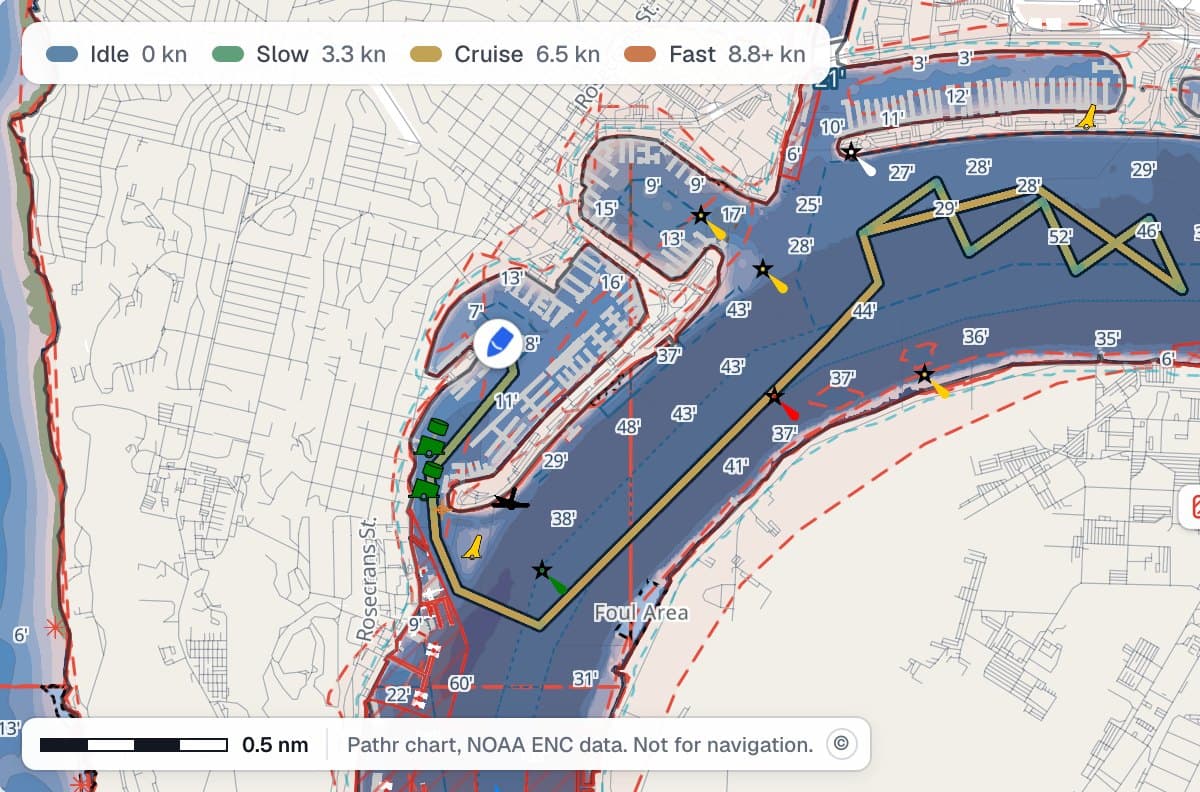
After the session, the track shows every tack for the debrief.
Wind and position from every boat
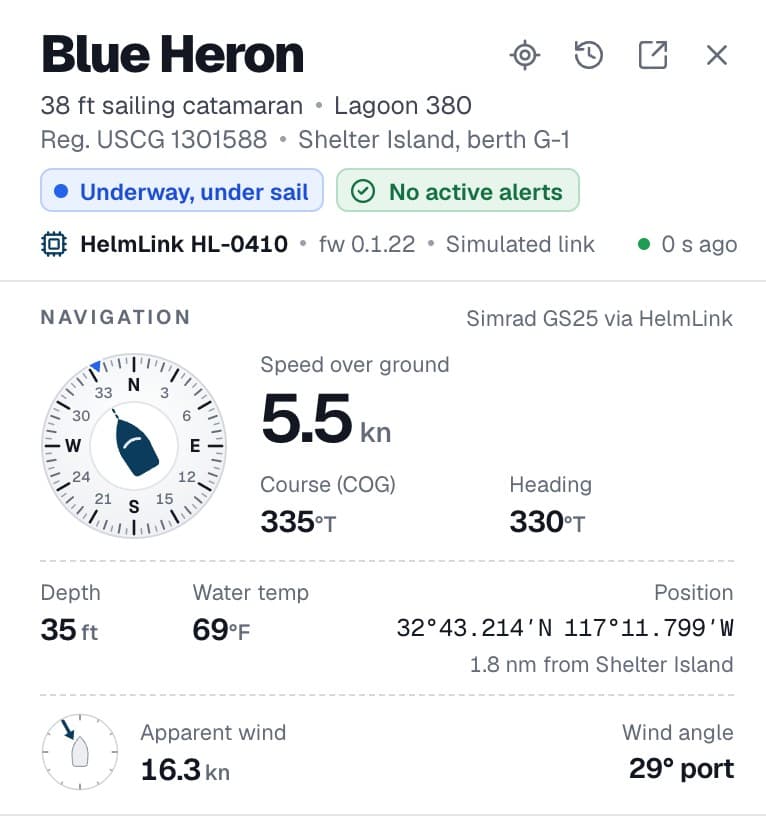
Boats with a wind instrument on their network report the apparent wind along with speed, heading and depth, so the dock office sees the conditions each class is sailing in, not just where the boats are.
Late back, flagged on time
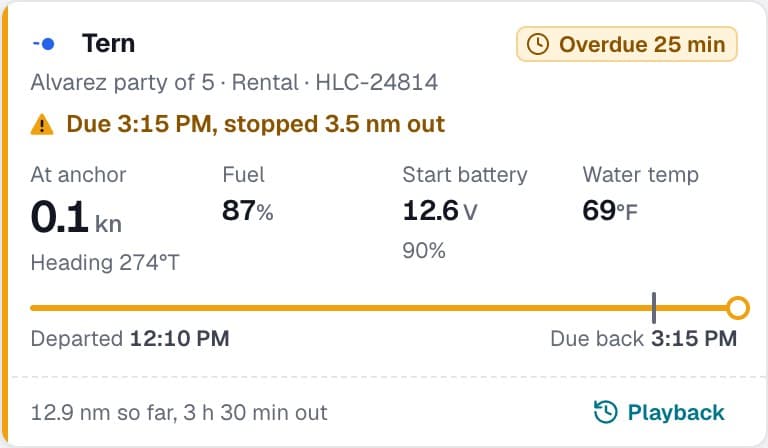
When a boat is not back in the return zone by the end of its session, it is marked overdue with how late it is and how far out, and the alert escalates if it stays out.
Send the lesson route to the instructor
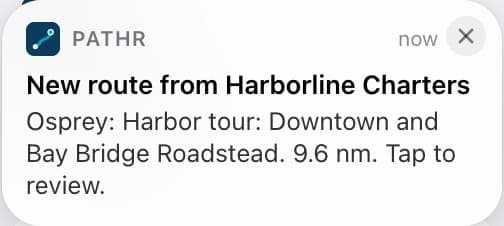
Plan a route on the chart and send it to the instructor's Pathr app; the instructor reviews it, accepts it and stays in command. In the demo today the instructor's side runs on a simulated phone; the screen comes to the Pathr app for pilot fleets.
Boats ready for the next class
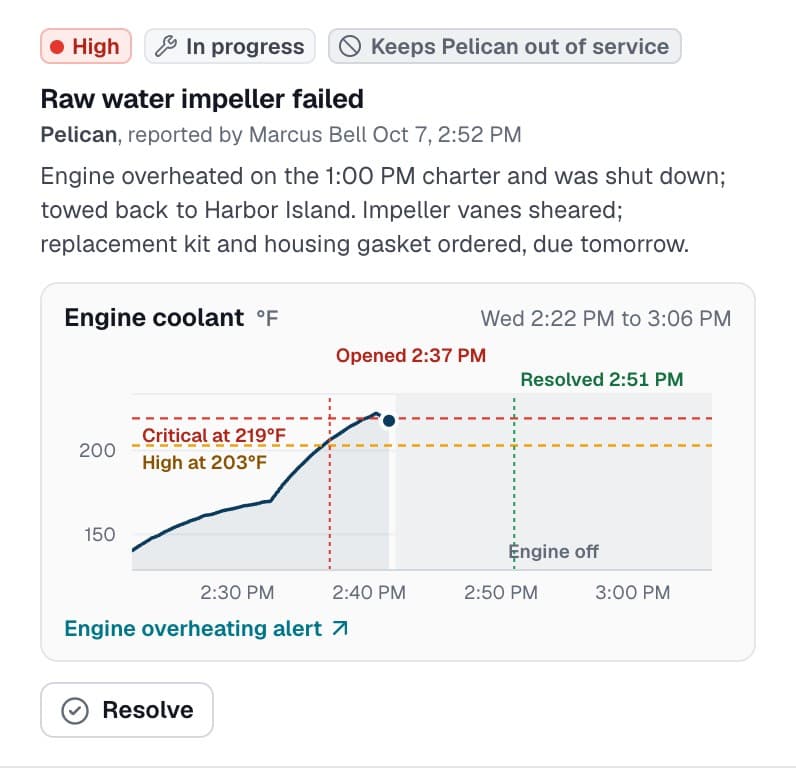
Engine hours on auxiliaries, battery and charging, and open issues: a boat with a known problem stays out of service until it is fixed.
Questions operators ask
- Does it work on sailboats without engines?
- Yes. Position, course and speed come from GPS, and a wind instrument on NMEA 2000 adds wind. Engine readings appear only on boats that have them; anything a boat cannot measure says Not equipped.
- Does it replace our scheduling software?
- No. During the pilot, sessions are entered in Pathr Fleet so it knows each return time. Integrations with booking software are planned.
- What goes on the boat?
- A HelmLink unit on the boat's NMEA 2000 network, the same network the chartplotter and engine gauges already use. It reads the position, engine, fuel and battery data that is already there. Pilot units ship with a cellular modem.
- What happens when a boat loses cell signal?
- The unit keeps recording and fills the gap when it reconnects. Every reading shows its age, so a boat out of signal reads as out of signal, not as stopped.
- Can Pathr Fleet stop a boat or call for help?
- No. Pathr Fleet supports your team: it shows where boats are and what needs attention. It never controls a boat, never dispatches help on its own, and does not replace required marine safety equipment or emergency services.
- How do we try it?
- With the 60-day Pathr Fleet Pilot: up to five of your boats, HelmLink hardware with cellular, the fleet dashboard and onboarding, including drawing your operating areas and return zones with your team. Pricing is discussed on the call.
Pathr Fleet for other operators
The pilot
60-day Pathr Fleet Pilot
Up to five of your boats on Pathr Fleet for 60 days, with HelmLink hardware, cellular tracking, the fleet dashboard and onboarding.
Pricing is discussed on the call.
How it starts
- We reply by email to set up a short call.
- We look at your boats and their NMEA 2000 networks together.
- If it is a fit, we plan your 60-day Pathr Fleet Pilot: HelmLink units on up to five boats, with your operating areas and return zones set up with you.
Open to a small number of charter and rental operators.
What the pilot includes
Up to five vessels
Start with the boats you most want to keep an eye on: rentals, charters or both.
HelmLink hardware
A unit on each boat, on the NMEA 2000 network already aboard. Pilot units ship with a cellular modem.
Cellular tracking
Positions and readings while boats are under way, not only when they are back at the dock.
Fleet dashboard access
The chart, alerts, trips and bookings, maintenance, routes and reports for your team.
Onboarding
Operating areas and return zones drawn with your team, and a walkthrough for your staff.